|
|
 |
|
|
|
 
|
 
|
 |
||||||||||||||||||
|
|
|
|
|
|
|
|
|
|
|
|
|
|
|
|
|
|
|
|
|
|
RETURN *** VIEW MAP - ARGENTINA *** VIEW MAP - BUENOS AIRES (CAPITAL) *** RETURN |
|||
|
|
 |
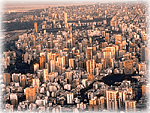
The area of Buenos Aires comprises the city of Buenos
Aires and the most outstanding tourist attractions of the region: La Boca,
Delta del Tigre and San Telmo. The city’s unique character is the result
of a combination of different architectural styles. Green open spaces,
which attract local people every weekend, are framed by the silhouettes
of classical and modern buildings. During the whole year the city attracts
a lot of visitors, even those foreign tourists who are on their way to
other regions. The best seasons to visit Buenos Aires are spring (from
September to December) and fall (from March to May). Winter is cold, damp
and rainy and summer can be overwhelmingly hot and humid.
|
|||||||||||||||||||||||
|
MAY SQUARE - PLAZA DE MAYO |
|||||||||||||||||||||||||
|
|
|||||||||||||||||||||||||
|
The largest airports are Aeropuerto Internacional de Ezeiza
(30 km away) and Aeropuerto Jorge Newbery (located downtown but operates
with domestic flights only), also known as Aeroparque. There are several
alternatives to get downtown from any of the two airports: Taxis or chauffeur-driven
car rides from Ezeiza cost A$ 45 and from Aeroparque A$15. There are shuttle
services that cost A$ 20 from Ezeiza and A$ 8 from Aeroparque.
|
|||||||||||||||||||||||||
|
When getting around the city, the best option is the public
subway system that reaches all the tourist attractions in a safe and reliable
way and costs only A$ 0,70 each way. There is a second option, the public
bus system. Buses run all over the city and they are usually safe during
the day. The cost of a bus ride is similar to the subway. In order to
visit San Isidro and Tigre, the best option is Tren de la Costa (train)
because it allows passengers to get off at any station they want to visit.
Board the Mitre line at Retiro Station and commute in Olivos. For longer
distances, there are public trains, buses or rental cars (which cost about
A$ 80 daily).
|
|||||||||||||||||||||||||
 TANGO TANGO |
|||||||||||||||||||||||||
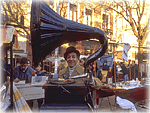 - -SAN TELMO
 |
|||||||||||||||||||||||||
|
Buenos Aires offers visitors of all ages a wide range
of night and day activities. Argentinians are well-known for going to
discos and having fun at bars late at night until early in the morning.
There is a good number of theatre plays and music shows in the traditional
Corrientes Avenue. Buenos Aires citizens, referred to as porteños, agree
that the city never sleeps and that bars and bookshops are open late.
Florida street and Santa Fe Avenue as well as several shopping centres
display typical leather products that can be acquired by shoppers.
|
|||||||||||||||||||||||||
|
|
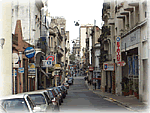
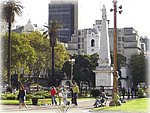
The city centre is a very noisy , busy and crowded place
during the week and deserted on weekends. That is a good opportunity to
visit the city’s public buildings such as the Pink House -the Presidential
building- in front of the historic Plaza de Mayo, the cathedral, the -Cabildo”
-town hall- and the “Municipalidad”-town council-. The obelisk and the
Colon Theatre are are quite near, just a few blocks away from the Pink
House right on 9th of July Avenue (Avenida Nueve de Julio). Avenida de
Mayo is heralded by domes and old buildings, offering a beautiful ride
into Argentina’s old days.
|
||||||||||||||||||||||||
 |
|||||||||||||||||||||||||
|
Puerto Madero, once used for cereal storing ready to be
shipped abroad, has been rebuilt over the past years: its premises have
been recycled in order to make use of the place for restaurants, offices
and bars. There is a nice promenade along the river where there are sailing
boats and mooring posts. There is also an area –towards the river- with
green open spaces ( a forest reserve) where there are paths for bikers
and strollers.On weekends you can’t miss the opportunity of visiting any
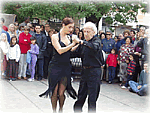
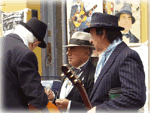
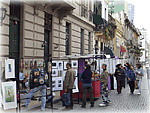
of the typical "Tango Neighbourhoods". On Sunday from midday on, San Telmo
( a few blocks from Plaza de Mayo) and Caminito street in La Boca (a little
farther) offer handicrafts and antiques market fairs, paintings, bars,
tango music and dances in the streets. For those who like football, "La
Bombonera" stadium (one of the most traditional football clubs in Argentina)
is located in La Boca. At night it is possible to attend a wide range
of professional Tango shows that take place in San Telmo and, why not,
learn a few steps of this sensual dance.
|
|||||||||||||||||||||||||
 |
|||||||||||||||||||||||||
|
La Recoleta, well-kown for its restaurants, exquisite
shops, museums, Iglesia Del Pilar and outdoor walks, is a place usually
crowded with foreign visitors and local people. On weekends there is an
artisans fair that takes place there, as well as music and art shows.
Many people find it interesting to visit the cemetery since a lot of famous
people (Evita among them) are buried there. Buenos Aires, like other Latin
American big cities, suffers from poverty and lack of resources. It is
very usual to find homeless people begging for coins at bus terminals
and parks, and precarious housing areas are often found in the outskirts
of the city. Even though security measures are better than in other Latin
American cities, robberies taking place in public transports have increased
over the past few years. Reasonable precautions should be taken, specially
in areas outside downtown, including La Boca and San Telmo and at nighttime
in the financial centre. Calling for a taxi over the phone is also recommended
since robberies involving tourists sometimes take place in taxis. Buenos
Aires infrastructure for the tourist is a good and varied one. There is
a good number of hotels, apartment complexes, private homes for rent and
hostels that can be provided to students. A good variety of restaurants
include expensive choices as well as fast food. Tourists usually stay
at hotels that are located downtown or in Recoleta. Reservations are suggested
specially during Easter, and the winter holidays in July. The Tourism
Officce offers information in Santa Fe avenue and Suipacha street, but
other information centres can be found in Florida street, in Pto Madero
(derrick) and aiports.
|
|||||||||||||||||||||||||
|
|
|
|
|
|
|
|
|
|
|
|
|
|
|
|
|
|
|
|
|
|
|
|
|
|
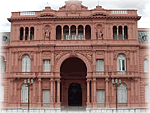 -PINK HOUSE - CASA ROSADA
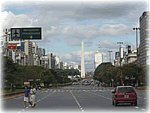 OBELISK - OBELISCO